University Library
Earth AbidesThe University Library is a surviving academic building that Ish comes to see as a reserve of knowledge and practical possibility after the Great Disaster. Its importance lies not only in the books it holds but in the future Ish imagines for them: a child who can read, people able to use the books, and the preservation of seeds and other companions to human civilization. Over time, the Library also becomes a protected, almost sacrosanct place in the community, revealing how the work of preserving an inheritance can harden into a rule against touching it.
Setting and Survival
On the day after Em tells Ish that she is pregnant, he drives to the University campus and parks outside the Library. He has not entered it since the Great Disaster, although he has continued to visit the City Library for books. The University Library stands undisturbed: its surrounding trees and bushes have scarcely grown taller in the months since the disaster, its drainpipes appear to work, and the white granite walls show no water stains. Dirt, litter, and disuse are the clearest signs of change. The building has survived physically, but its former place within an actively maintained institution has vanished.
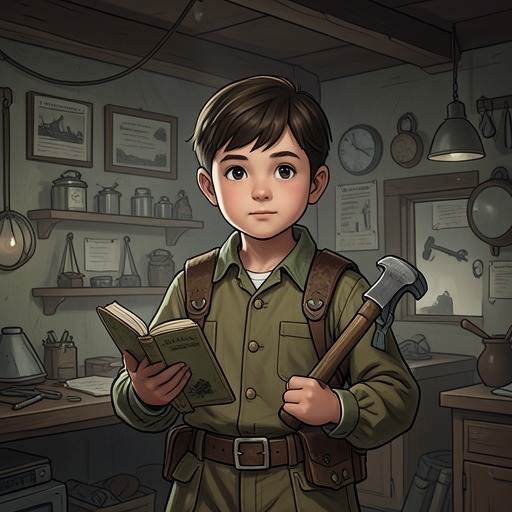
Entry requires Ish to break part of a windowpane with his hammer. He reaches through to unlock and raise the window, reluctant to leave a breach that might admit animals or rain. He plans to bring boards and make the opening rat-proof and weatherproof. The careful compromise captures the Library’s new condition: its contents may be preserved, but only through the labor of someone who must now supply the maintenance once assumed to be ongoing.
That vulnerability belongs to a wider pattern in the book. The lights continue after people die because the electrical network initially adjusts around broken wires and failed power-houses; only later do neglected generator governors, whose oil had required inspection every ten days and replenishment perhaps monthly, begin to fail. Water infrastructure also carries hidden weaknesses: a flawed section of aqueduct pipe leaks for years, while rain and leaves can plug a drain on San Lupo Drive and send water across a street and into a house. Against these accumulating failures, the Library appears unusually intact, but its survival does not make it self-sustaining. It, too, depends on human attention to keep weather and animals out and its contents usable.
A Storehouse Reimagined
Ish has visited the Library hundreds of times during his university years, when entering it was an ordinary part of his life. After the disaster, the same rooms produce a different response. Knowing that he will soon be a father, he feels awe at the wisdom stored there and sees it as knowledge through which civilization might be rebuilt. He does not want his child to grow up scavenging indefinitely when the means of learning are still present.
He had come looking for books on obstetrics, but after entering the main reading room and wandering through two levels of stacks, he leaves in a rush of imagination. The books matter, but he recognizes that books alone cannot restore a culture: there must also be people who can read them and know how to use them. He adds seeds to the resources that must be saved, worrying that important domestic plants could disappear. His vision therefore extends beyond the Library’s shelves. Knowledge requires readers, while agriculture requires living seeds; the continuation of civilization depends on preserving both human capacities and the nonhuman materials on which people rely.
On the drive home, Ish imagines discoveries in science and philosophy, and practical things such as the wheel and compass, as companions that have marched alongside humanity. This idea gives the Library a broader meaning than that of a building full of books. Its contents belong to a network of accumulated skills, inventions, and living resources. Ish hurries to tell Em, expecting shared excitement; she is not persuaded by his account of civilization and associates it with airplanes going ever higher and faster. The exchange sets his expansive hope beside her skepticism, without cancelling his resolve to think about what a child will need.
Joey and the Work of Reading
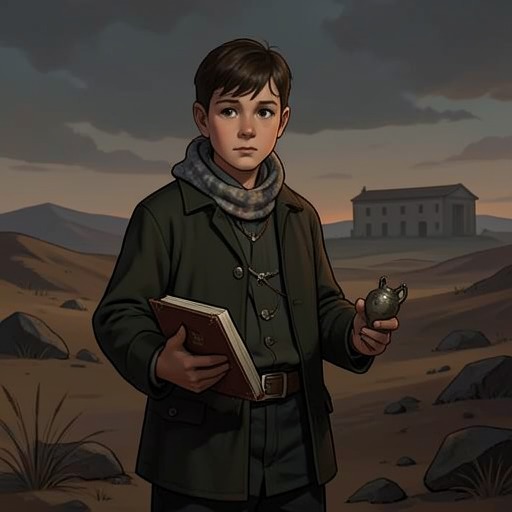
Years later, Ish takes his youngest son, Joey, to the City Library, four blocks away. Joey runs ahead, eager to go, and Ish realizes that he has never brought him there before because Joey’s reading and intellectual interests have developed so quickly. Ish has preserved the University Library as a reserve and used the City Library for his own reading for many years; by then, he has forced the lock on the City Library’s main entrance. He enters proudly with Joey, making the visit a passage from private access to shared learning.
They walk through the main reading room and stacks. Joey says little, but Ish sees him taking in the titles as they pass. When Ish asks what he thinks of the collection, Joey wonders whether it contains all the books in the world and asks whether he can read them. The encounter gives concrete form to Ish’s earlier recognition that a store of books is not enough: someone must become a reader. Joey’s curiosity offers Ish a glimpse of the future he had imagined, though it does not mean that the whole inheritance has already been transferred or understood.
Protection and Taboo
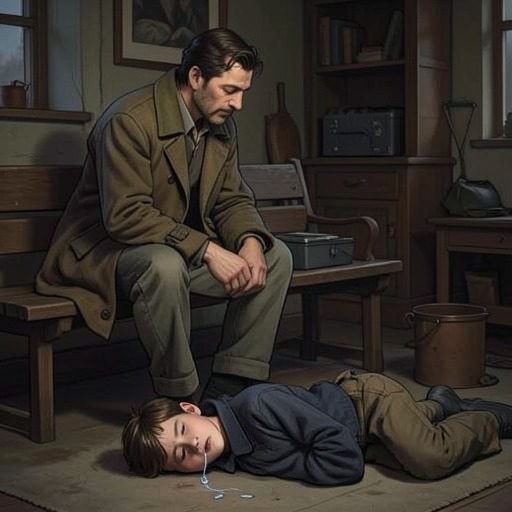
The University Library’s preservation also has a social cost. When the oldest boys were young, Ish took them on a long walk to the campus and fell asleep. Two boys loosened a board he had nailed across the broken window, entered the stacks, and began throwing books onto the floor. Ish followed them in horror and beat them. He later felt ashamed of the unreasoning force of his reaction, but he believed the boys had been impressed as much by his outrage as by the beating and had passed that impression on to younger children. The Library remained safe, which pleased him even as he began to recognize the fear surrounding it as a possible taboo.
The incident shows how protection can be transmitted without deliberate instruction. Ish does not describe having set out a formal rule; instead, his response teaches the children that the Library is not to be entered or its books disturbed. In later reflection, he connects this reverence with other customs whose force rests more on assumption than explanation, including the hammer’s special status. The Library is thus both an essential reserve and an object of inherited deference. Its narrative significance rests in that tension: preserving knowledge is necessary, but treating its repository as untouchable risks separating the next generation from the very resources meant to help them rebuild.